Nov 2022
Tel Aviv University researchers find that exercise defeats cancer by increasing glucose consumption
“Physical exercise, with its unique metabolic and physiological effects, exhibits a higher level of cancer prevention than any medication or medical intervention to date.” Dr. Yftach Gepner
The animal model exhibited a similar outcome, enabling the researchers to identify its underlying mechanism. They found that aerobic activity significantly reduced the development of metastatic tumors in the lab models’ lymph nodes, lungs, and liver
- Exercise prevents cancer incidence and recurrence, yet the underlying mechanism behind this relationship remains mostly unknown. Here we report that exercise induces the metabolic reprogramming of internal organs that increases nutrient demand and protects against metastatic colonization by limiting nutrient availability to the tumor,
- A new study at Tel Aviv University found that aerobic exercise can reduce the risk of metastatic cancer by 72%. According to the researchers, intensity aerobic exercise increases the glucose (sugar) consumption of internal organs, thereby reducing the availability of energy to the tumor.
- Our study, examining the internal organs, discovered that exercise changes the whole body, so that the cancer cannot spread, and the primary tumor also shrinks in size.
- high-intensity aerobic exercise, which derives its energy from sugar, can reduce the risk of metastatic cancer by as much as 72%. “If the general message to the public so far has been ‘be active, be healthy’,” they say, “now we can explain how aerobic activity can maximize the prevention of the most aggressive and metastatic types of cancer.”
- monitored 3,000 individuals for about 20 years, indicated 72% less metastatic cancer in participants who reported regular aerobic activity at high intensity, compared to those who did not engage in physical exercise.
- researchers hypothesized that in both humans and model animals, this favorable outcome is related to the enhanced rate of glucose consumption induced by exercise
- we found a rise in the number of glucose receptors during high-intensity aerobic activity – increasing glucose intake and turning the organs into effective energy-consumption machines, very much like the muscles. Consequently, if cancer develops, the fierce competition over glucose reduces the availability of energy that is critical to metastasis.”
- “when a person exercises regularly, this condition becomes permanent: the tissues of internal organs change and become similar to muscle tissue.
The full paper can be viewed below – AACRJournals.org Cancer Res; 82(22) November 15, 2022
-What we’ve known in the Ketogenic Dog Group for quite some time-
Now, we’ve been well aware of the benefits of rigorous exercise in our dogs and how much we can lower serum blood glucose levels after strenuous exercise in the Ketogenic Dog Group for quite some time now. It only makes sense that if we are greatly lowering the serum blood glucose levels that we are in laymen’s terms – giving cancer less of the fuel it needs to proliferate–
And on a well formulated Ketogenic diet we are already at an advantage given the fact that we routinely see a drastic reduction in blood serum glucose levels and when we ADD exercise to this protocol, we only stand to lower glucose levels even more!
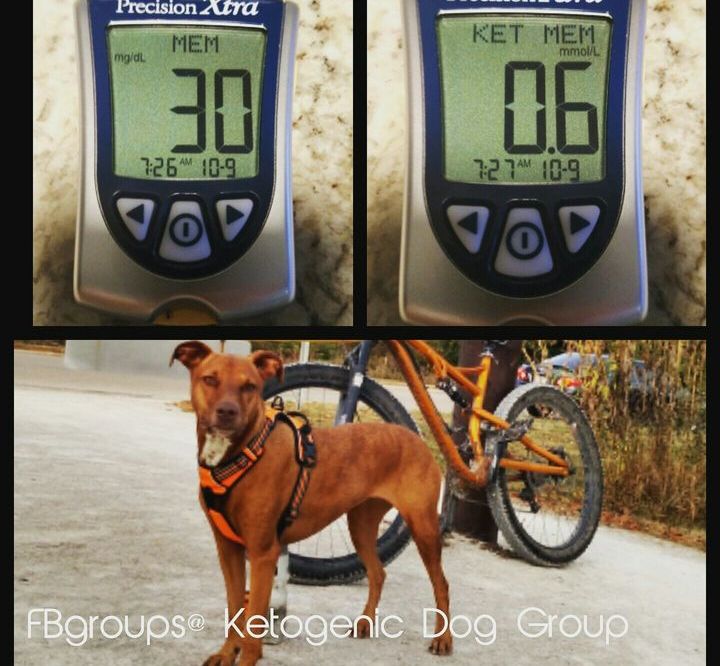
I’ve documented this in my own dog Emie. Taking her blood glucose readings before exercise, 15 minutes after exercise, and then again 40 minutes post exercise. And the readings speak for themselves (see photo below) and this was done on a very modest 1:1 ketogenic ratio diet for my dog (lower fat as opposed to a higher fat 2:1 ketogenic ratio which would lower glucose levels even further- see the 2nd picture down below to see her blood values on a higher fat 2:1 ketogenic ratio diet)

Now, on a higher fat 2:1 ketogenic diet we stand to *safely* lower glucose levels even further- see photo below
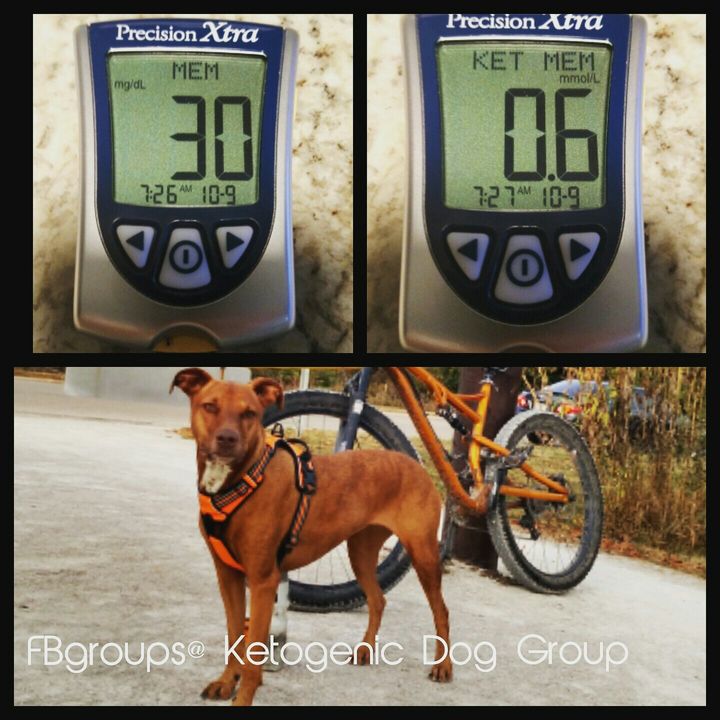
*I’m empathizing the word SAFELY, because anyone who knows anything about glucose levels and what is “standard or safe” for dogs, may see that reading of 30 mg/dl and gasp and say, “oh my god! that is way too low!” and ordinarily yes, one would be correct. A reading that low would in fact be grounds for hypoglycemia for a dog on a standard diet and it would be a pretty major medical emergency for a dog. but here’s the caveat. since the dog is in ketosis (validated by ketone readings shown in that same pic above- .6 mmol) , and ketone levels have increased, the body is now essentially “switching its fuel source” to fat and ketones and not relying on glucose. So, we’re staving off the detrimental effects of hypoglycemia. In fact, as you can see in the photo above, she was out running her heart out that day perfectly healthy and fine with staggering low glucose levels. But that’s because she was in ketosis!
How do we validate ketosis in our dogs that are on a Raw home prepared Ketogenic diet? quite easy actually! with an inexpensive human grade glucose monitor we can instantly see the glucose and ketone levels in our dogs in real time which in turn validates whether or not they are in ketosis. More info on that can be found HERE
Curious how to get your dog started on a home prepared Ketogenic Diet? look no further. We have the most comprehensive course available that will walk you through every step of the way.



















 KetoPoweredK9.com