Many of us are aware of the neurological dangers of using flea and tick medications, but a condition that may not be so well know is Retinal toxicity affecting the dog’s vision/depth perception.
As time goes on, researchers are finding more and more problems that are developing in our dogs from some of the ever-so popular flea & tick medications. Back in 2018 the FDA was alerting pet owners and veterinarians of the potential for neurologic adverse events/SEIZURES: in dogs and cats when treated with drugs that are in the isoxazoline class such as Bravecto, fluralaner, credelio/lotilaner, nexgard/afoxolaner, simparica/sarolaner, simparica/sarolaner/moxidectin/pyrantel, revolution plus/(selamectin and sarolaner) topical solution for cats. But yet many pet owners still to this day have no idea the dangers these drugs can hold.
original statement link here
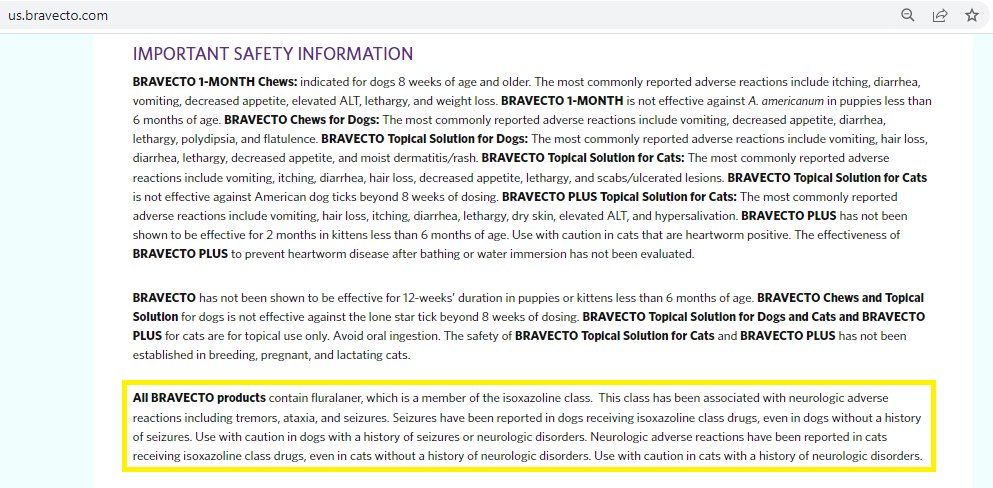
the photo above shows the latest updated “Important Safety Information” for Bravecto from the pharma’s website in 2023- so by their OWN ADMISSION, their product is known to cause these very serious life-threatening issues! yet its still sold, often times with NO VERBAL warnings to pet owners- and unfortunately, most pet owners never bother to read the tiny pamphlet warnings inside the box of medications that contain this info. so they never know the risk they are taking using these drugs.
The EWA (European Medicines Agency) published a 244page report (see below), which contains approximately 22,000 independent reports for adverse reactions to bravecto. These include everything from DEATH, Neurological disorders/seizures/drooling, chattering of teeth, foaming at the mouth, Ataxia, Digestive disorders, Tumors, renal disorders, vomiting, the list goes on and on, and keep in mind that this only spans 8 years and these are only the cases that actually got reported, many, many cases never get reported.
And don’t be misled into thinking that flea and tick collars are any safer, they are not. (2022 staff report here – “EPA knew about the dangers posed by the collar—and the many consumer complaints about the collars—for several years yet failed to take action” “OVER REPORTED 100,000 incidents and 2,698 reported pet FATALITIES.”)
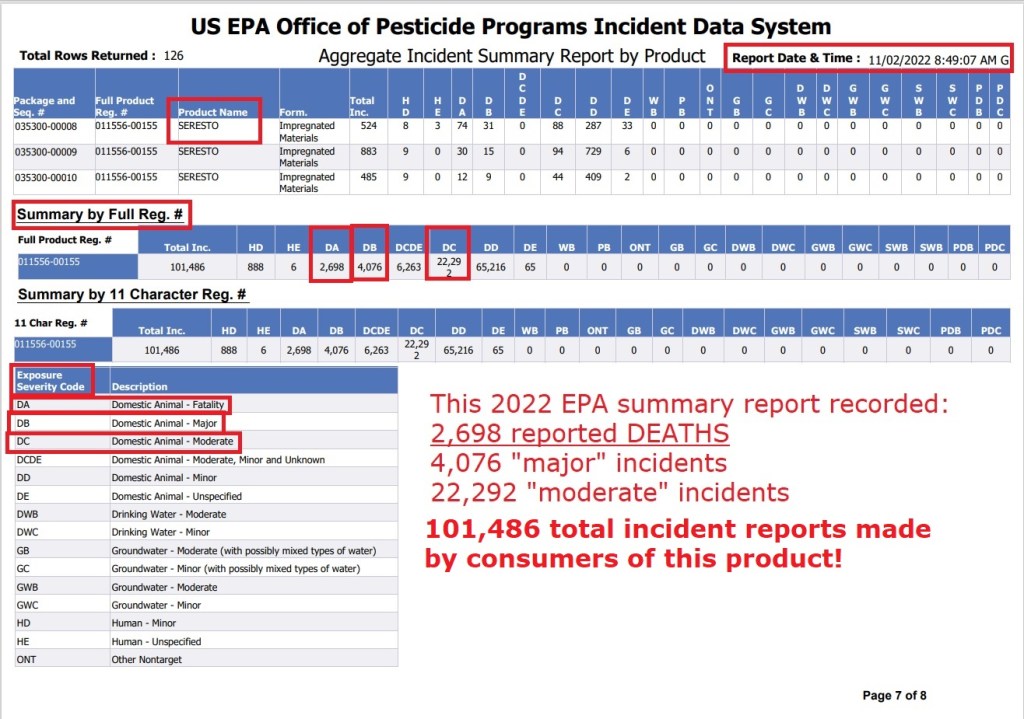
The Center for Biological Diversity filed a petition to the EPA back in 2021, April, to cancel the registration and ban the sale of Soresto flea and tick collars. At that time in April 2021 there were 75,385 total reported incidents, and 1,698 reported fatalities. So in 1 year between 2021 and 2022’s reports there were 1,000 additional reported fatalities that could have been prevented. “It’s disgusting that even after 75,000 reports of pets suffering and even dying the EPA chose to do nothing at all,” said Lori Ann Burd, environmental health director at the Center. “Enough is enough. It’s time for the EPA to own its failures and cancel this product before any more harm occurs.”
“No other pesticide product has been the subject of this many incident reports, which include 1,698 complaints linking the product to pet deaths and nearly 700 involving harm to people.” – The Center for Biological Diversity– regarding Seresto collars.
And as this presentation below also shows, researchers are also finding Retinal Toxicity issues from these drugs, and some of these symptoms took TEN YEARS to present themself in the dog! and once the medication was stopped, the symptom resolved itself.
And this goes to show, yet again, that sometimes it can take YEARS until symptoms arise from a drug. which can lead the pet parent down an endless path “chasing their tail” so to speak, when all of a sudden, their dog develops some strange health issue and there has been nothing new added in the dog’s lifestyle/diet/medication routine. Leading a person to think ” well, my dog has always been on “XYZ” medication/flea/tick medication, and has never had a problem before, so that can’t be the issue. So, they start this vicious cycle of trying to fix this new issue that could very well be caused by something that their dog has already been on and is just now showing signs of an adverse type of reaction/symptom, but the correlation is overlooked and missed because it took so long for this new disorder to present itself.
All rights reserved to 2018 ACVO Conference Presentation for these video clips and presentation shown below
The video below shows an agility dog suffering from depth perception issues due to retinal toxicity. The dog is starting it’s jump way too soon from where the actual jump bar is placed. (In the case highlighted below, it took TEN YEARS until this dog developed vision issues and when the flea and tick medications were STOPPED, the vision issues subsided in the dog! Now if we stop and think about this for a minute, if a dog owner had been using a product for ten years and never had any “issues” with said product, it would be extremely easy to overlook or dismiss said product as being a cause or attributing to a new health related issue in the dog!)

In the case highlighted below, it took TEN YEARS until this dog developed vision issues and when the flea and tick medications were STOPPED, the vision issues went away in the dog!
A few key points from this presentation:
Heartgard/Ivermectin (This medication is used to treat certain parasitic roundworm infections, prescribed for preventing heartworm diseases and treating other conditions like ear mites, and sarcoptic and demodectic mange)
Nexgard (Afololaner)
Bravecto (fluralaner)
Simparica (Sarolaner
Credelio (Lotilaner)
Comfortis/Trifexis (Spinosad) – Spinosad can INCREASE serum Heartgard/ivermectin concentration by almost 400% !
****For More information on the personalized Ketogenic Meal Plan program and how to get your dog **properly **started on these diets, please click on the image below! ***


 KetoPoweredK9.com